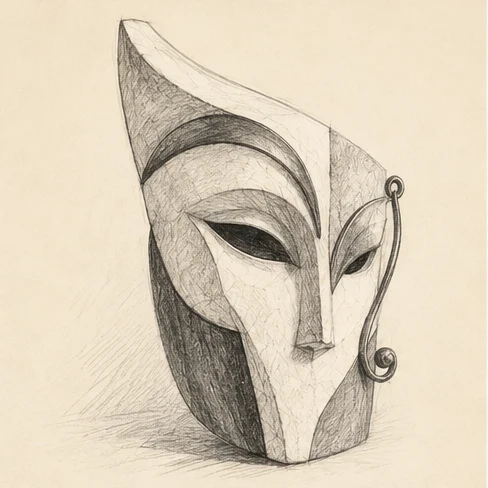
A mask can suggest carved timber or cast metal without being made from either. Separating the appearance of a surface from its construction is a useful first step when comparing theatrical materials. A second step is to recognise that a mixed-material object needs more than a single generic care rule.
Wood: form with a direction
Visible grain can become part of a design, while carving offers a way to shape relief directly. The type of wood, its condition and the finish matter; “wooden” alone tells us little about a particular mask’s weight or wearability. Do not infer a carving tradition from the grain or the outline.
The Canadian Conservation Institute identifies surroundings and handling as important to the care of wooden objects. Avoid treating direct heat or a damp storage corner as harmless. A finished performance object needs care instructions from its maker, particularly where paint, adhesive or fastenings meet the wood.
Papier-mâché and fabric: surfaces built in layers
Paper-based construction can be shaped and painted; fabric can cover a structure, soften an edge or carry a surface pattern. These are design possibilities, not guarantees of lightness or flexibility in every finished object. Layers, binders and supports change the result.
Paper and textile conservation guidance encourages attention to handling, support and environmental risks. A painted paper shell should not be given a wet-cleaning treatment simply because an unpainted sheet seems durable. Nor should a fabric-covered mask be washed as if it were an ordinary garment. A mixed construction may contain components with conflicting needs.
Resin: ask which formulation
Resin casting can reproduce a sculpted form; manufacturer prop tutorials show examples of that approach. But the word resin covers different materials and processes. The appearance of a polished surface does not establish the chemical composition, cure state or suitability for contact with a performer.
CCI’s plastics guidance treats deterioration and care as material-dependent. For a proposed new object, consult the specific manufacturer’s technical and safety information and a competent maker. We do not provide mixing ratios, solvent recommendations or a claim that any resin is safe to wear.
Keep a material record with the object
A useful record lists the core, covering, finish, adhesive and attachment method separately. Add the maker’s instructions, repairs and storage requirements. “Gold mask” describes a color; “painted paper shell with a metallic-looking finish” says more, if the construction is actually known.
The comparison table in this journal is an orientation aid. It is not a ranking, a conservation treatment plan or the result of material tests. For damaged or historically important objects, obtain advice from a conservator rather than trying a general cleaning recipe.
Sources & scope
These references support the factual context. The exercises and concept-mask interpretations are original editorial proposals, not reports of practical testing.
- Canadian Conservation InstituteBasic care of furniture and objects made of wood
General care of wooden objects, including the effects of their surroundings. Not a certification of a wearable mask.
- Canadian Conservation InstituteCaring for paper objects
Risks to paper-based objects and preventive care. Applied cautiously to mixed-material theatrical objects.
- Canadian Conservation InstituteBasic care of textiles
Handling and storage of textiles; not a universal washing method for costume.
- Canadian Conservation InstituteCaring for plastics and rubbers
Material-dependent deterioration and care of plastics. The term resin does not identify a single formulation.
- Smooth-OnSpecial effects and props: tutorials
Manufacturer examples of moulding and casting for props. Commercial technical source; no endorsement or affiliate link.
Text prepared with AI assistance. See authorship and human-review status. Source review and last update: 6 September 2026.