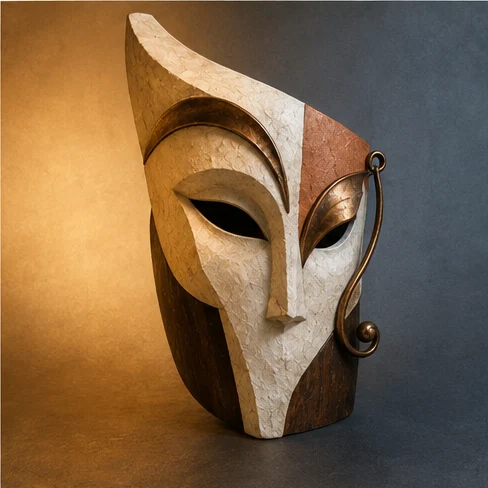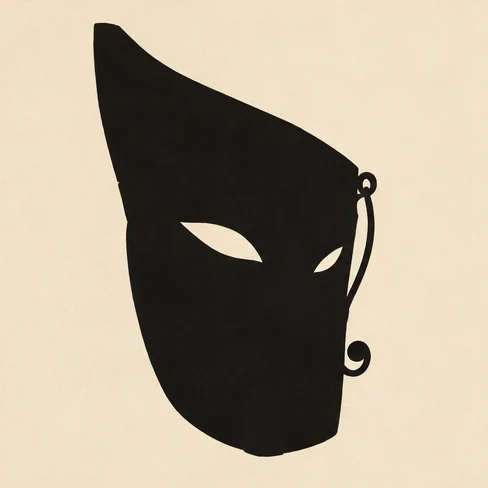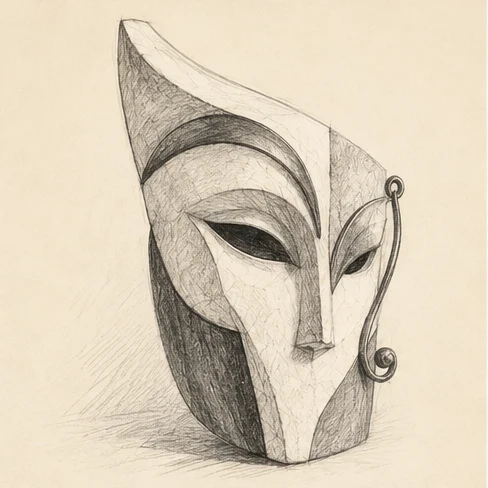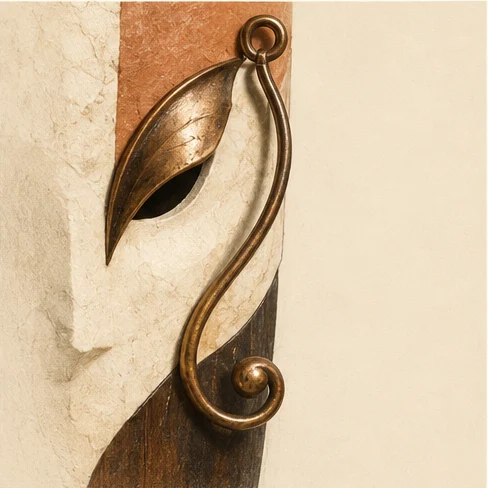
A repeated curve can organise a surface without carrying an inherited meaning. A carved line may frame an eye or guide attention around an edge. When an ornament looks unfamiliar, its appearance alone does not tell us who made it, where it came from or what it signified.
Start with a description, not a story
For the motif in our study, an evidence-based visual description is “a bronze-colored curve following the cheek.” It states shape, apparent color and position. Calling the same line a protective emblem would introduce a meaning for which this fictional design has no historical source.
Separate three kinds of note: what is visible, what is documented, and what is your interpretation. A useful caption can contain all three, provided they are not blurred together. If the maker or original purpose is unknown, leave that absence visible.
A named tradition needs a named source
UNESCO’s account of Nôgaku documents a particular performance tradition rather than a generic category of “ancient masks.” Its information should stay attached to that context. The V&A’s discussion of Oliver Messel concerns identifiable designs and a named theatrical production.
Neither source licenses us to attach the same history to the mask shown on this site. Similar-looking colors or facial proportions do not establish a connection. Use a collection record, archive or specialist source that identifies the actual object or practice being discussed.
Describe invention just as carefully
Our original concept uses asymmetry to interrupt the face and a narrow decorative line to reconnect its surfaces. Those are stated design intentions for this edition. They are not claims about what all viewers will feel or about a tradition that the image represents.
When developing your own ornament, keep the source of each reference in a research file. Mark direct quotations of a motif separately from broad observations such as “contrasting rough and smooth surfaces.” Acknowledgement matters, but it does not automatically settle permission or cultural considerations.
Make the caption do useful work
A compact caption can identify the image type, the object’s status and the scope of interpretation: “Digital concept for a stage mask, created for this journal; the border is invented.” That sentence prevents the render from being mistaken for a museum photograph.
If later evidence changes an attribution, update the article and explain the correction. Do not silently replace uncertainty with a more appealing story. The reader should be able to follow the path from a claim to its source—and recognise when the text is an original design exercise instead.
Sources & scope
These references support the factual context. The exercises and concept-mask interpretations are original editorial proposals, not reports of practical testing.
- UNESCO Intangible Cultural HeritageNôgaku theatre
A named performance tradition with documented relationships between masks, performance and music. Not a visual identification key.
- Victoria and Albert MuseumOn the road
A documented example of Oliver Messel’s mask designs for Zéphyr et Flore. No connection to the fictional mask pictured here.
Text prepared with AI assistance. See authorship and human-review status. Source review and last update: 6 September 2026.