Masks
How a Stage Mask Changes a Character’s Silhouette
A raised brow, a long cheek and a small turn of the head: reading expression through outline before detail.
Read the StoryAn independent journal of performance and design
Explore expressive masks, percussion instruments and the visual details that bring a performance to life.
Browse the Stories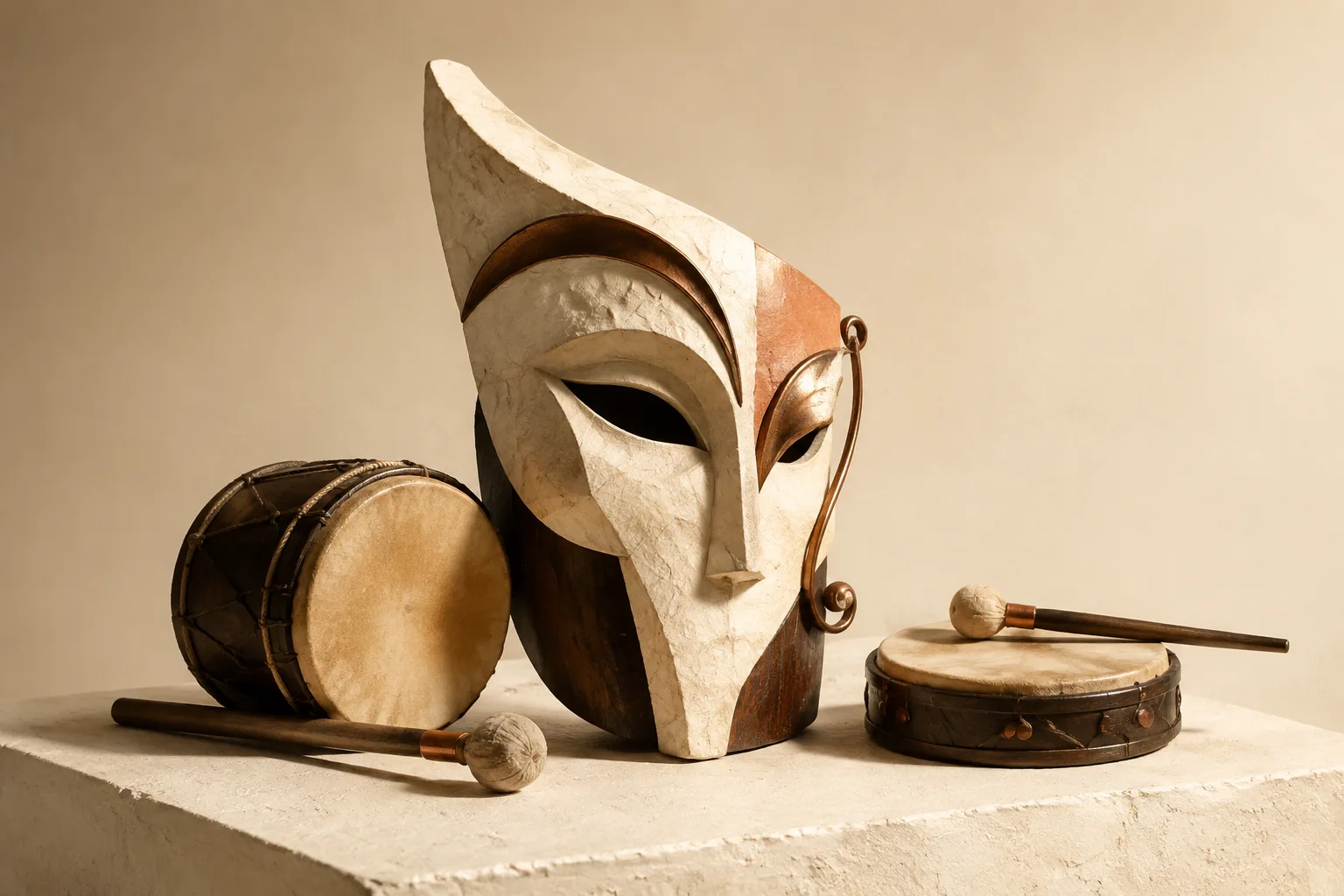
What a face can say before a performer speaks.
Sound & movementThe sounds that lead, follow and interrupt a scene.
Light & compositionBuilding a world from color, texture and shadow.
From the journal
Six perspectives on the face, the sound
and the spaces between them.
A raised brow, a long cheek and a small turn of the head: reading expression through outline before detail.
Read the StoryA practical sequence for moving from a character brief to a documented design—without mistaking a render for a finished prop.
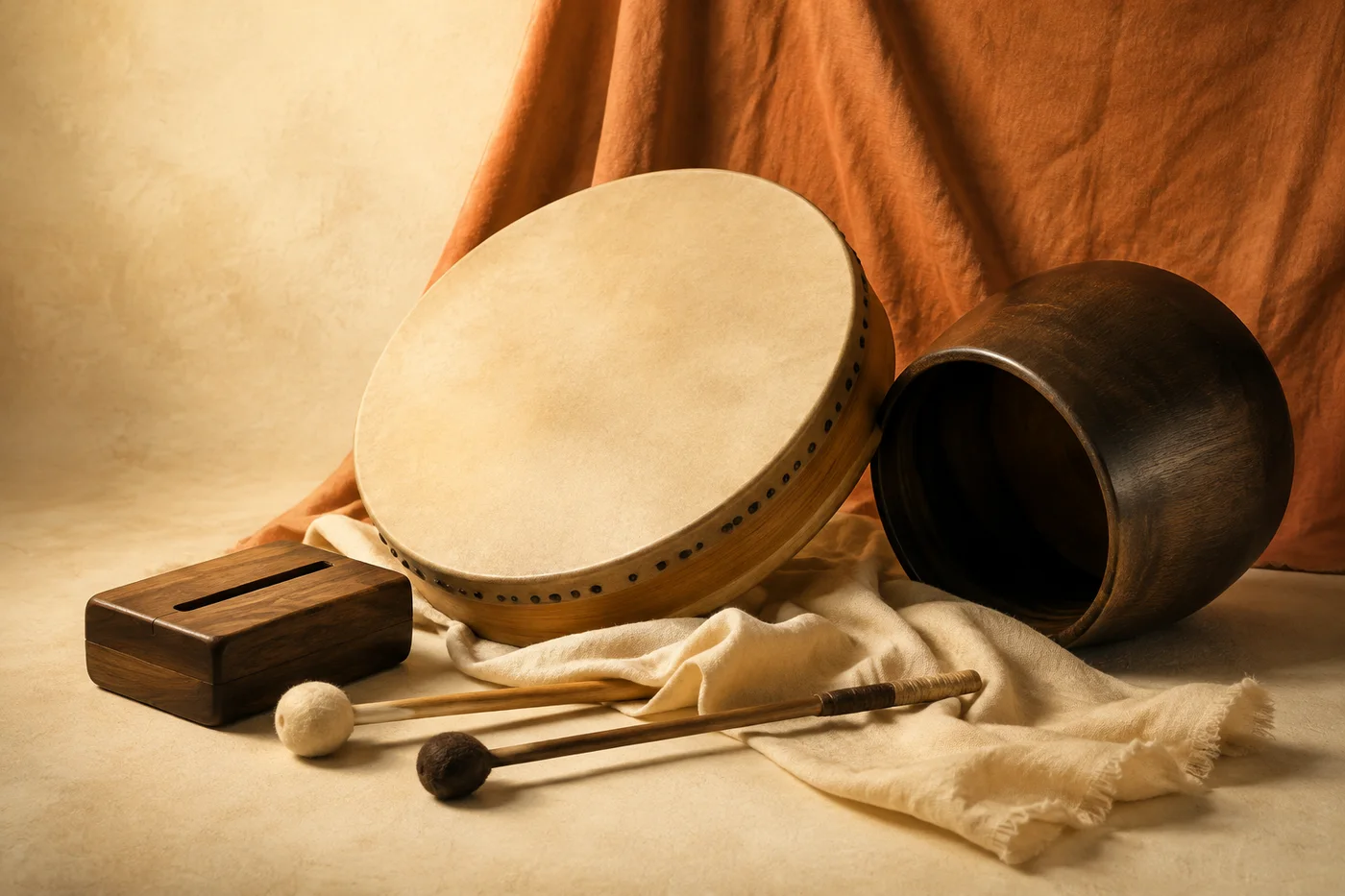
Read the StoryThink beyond a steady beat. Timing, timbre and silence can become part of a performer’s movement vocabulary.
Read the StoryRead a surface carefully. What looks like bronze may be paint, and a material name is not a complete care instruction.
Read the StoryBuild warmth from amber, contrast and selective reflection. A theatrical atmosphere does not need an actual flame.
Read the StoryDescribe what you can see, identify what a source actually supports, and leave uncertainty visible.
Read the StoryThe material notebook
A mask’s appearance is only part of its story. Construction, finish and care deserve their own notes.
| Material | Visual Character | Typical Use | Care Considerations |
|---|---|---|---|
| Wood | Grain and carved relief; the finish may conceal the grain. | A carved form or structural component, where selected by the maker. | Protect from unsuitable heat and moisture; follow object-specific handling advice. Care source |
| Papier-mâché | Layered, shaped surfaces that can take a painted finish. | Constructed mask and prop forms; supporting layers vary. | Support delicate edges. Avoid unassessed wet cleaning or pressure. Care source |
| Fabric | Weave, folds and surface texture; flexible or supported. | Covers, costume connections and decorative layers. | Avoid snagging and unnecessary light exposure. Do not assume it is washable. Care source |
| Resin | Cast relief and varied surface finishes; formulation matters. | Cast decorative prop components based on a sculpted original. | Identify the material. Follow its technical data; avoid generic solvent advice. Care source |
Design possibilities, not a universal construction recipe. General care notes: Canadian Conservation Institute. For resin prop applications, see manufacturer examples. No material testing is claimed.
Behind the design
An original mask concept, examined through
shape, surface and simulated light.
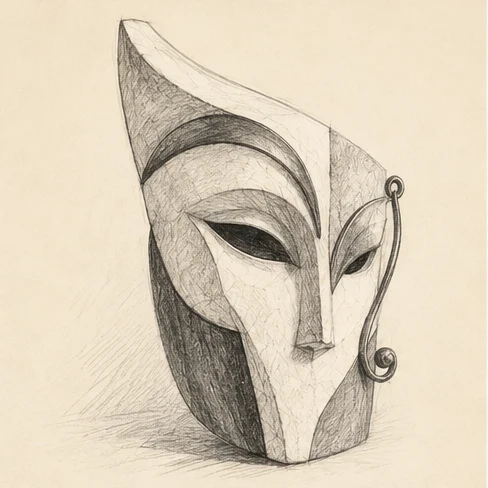
An uneven brow introduces the character. Front and side views pose different design questions.
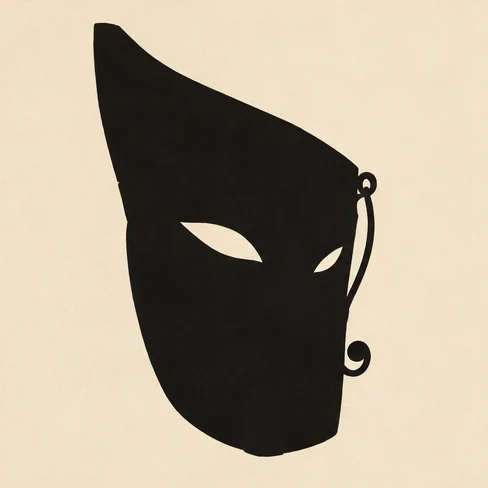
A dark outline separates the large form from the details painted inside it.
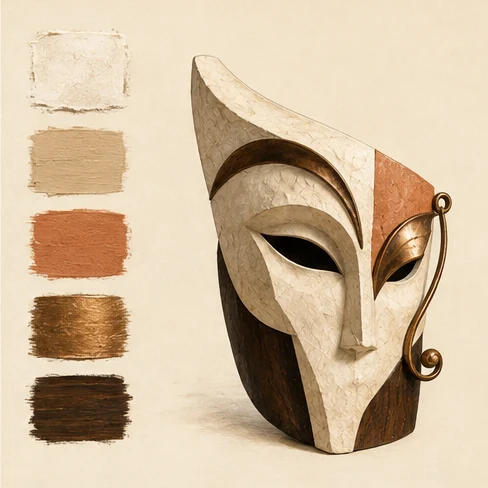
Ivory, charcoal and a bronze-colored accent keep the face more prominent than the decoration.
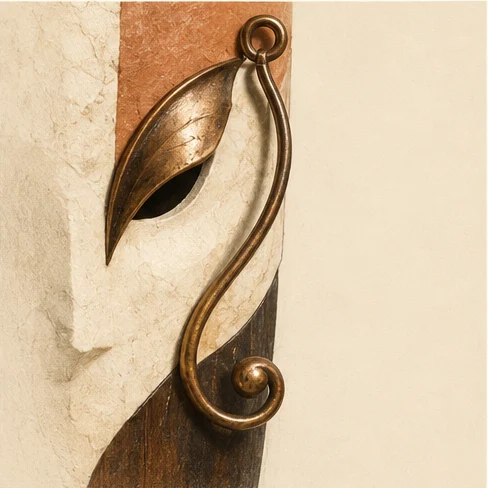
An invented curved line follows the cheek. No historical meaning is claimed for this motif.
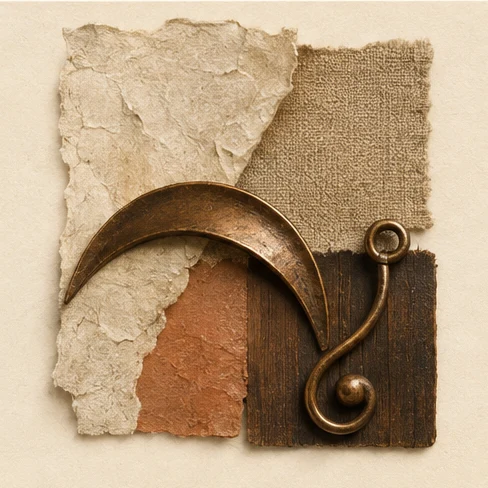
Paper, weave and wood-like impressions explore contrast. The samples are digital, not tested materials.
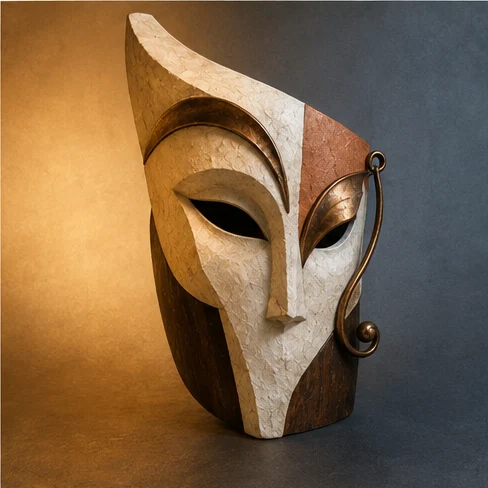
Warm and cool simulations change the emphasis on the same face. A real finish would need a physical check.
All six views are AI-generated illustrations of an invented contemporary design. They do not document a real artefact, workshop or material test. View image credits.
About the journal
Mask & Rhythm is a reading space for the craft of performance: how an outline suggests a character, a sound frames a movement, or light changes a surface.
We distinguish contemporary invention from documented tradition. Source notes explain what a reference supports; image captions explain what you are actually seeing.
Our scope, authorship & principlesWe explore stage-mask design, percussion in performance, materials, ornament and theatrical light. The journal offers illustrated explanations and proposed design exercises, not product testing or professional fabrication instruction.
The mask in this edition is an original contemporary concept created for the journal. It is not a museum object, a documented ceremonial mask or a design attributed to a particular culture. References to historical practices are identified separately and linked to sources.
This edition uses original AI-generated editorial illustrations, including the mask, design studies and percussion still life. There are no documentary photographs of real performers, objects or workshops. Image Credits identifies each asset and its role.
An image being visible here does not grant a reuse licence. Check Image Credits and Terms of Use, and obtain permission from the verified publisher before reuse. External source images are not included in this edition and retain their own rights.
Use the contact details on Contact when the publisher has activated them. Include the article title, the passage in question and a reliable source or a clear description of your suggestion. An offline correction template is available there; this site does not collect form submissions.